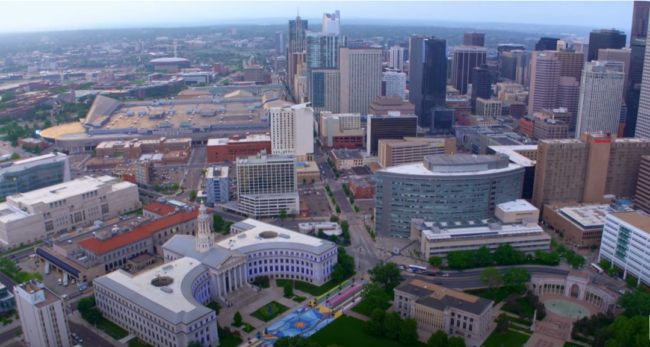
Denver’s Urban Renaissance: The Renewal and Revitalization of the 1960s and 1970s

In the 1960s and 1970s, Denver experienced a period of urban renewal and revitalization that transformed the city into a modern metropolis. During this time, the city underwent significant changes in its urban fabric, infrastructure, and economy, which contributed to its emergence as a regional hub for business, tourism, and culture.

Denver’s urban renaissance was shaped by several factors, including the decline of traditional industries such as mining and agriculture, the influx of new residents, and the growing demand for urban amenities and services. To address these challenges, city leaders embarked on a series of ambitious initiatives aimed at revitalizing downtown Denver and creating a more livable and attractive city.

Continue reading “Denver’s Urban Renaissance: The Renewal and Revitalization of the 1960s and 1970s”

United Airlines in Denver Hired The First Airline Stewardesses

In 1923, United Airlines made history by hiring the first airline stewardesses in Denver, Colorado. These pioneering women were trailblazers in the aviation industry, setting a standard of service and professionalism that continues to this day.

At the time, air travel was still a relatively new and unfamiliar experience for most people. Commercial flights had only been available for a few years, and passengers were often apprehensive about flying. To ease their fears and provide a sense of comfort and security, United Airlines decided to hire a team of young, attractive women to serve as stewards on their flights.

The first group of United Airlines stewardesses consisted of eight women, all of whom were registered nurses. They were chosen for their professionalism, poise, and ability to provide excellent customer service. They underwent rigorous training in a variety of areas, including first aid, emergency procedures, and hospitality.

Continue reading “United Airlines in Denver Hired The First Airline Stewardesses”

Denver’s Dark History: The Largest Japanese-American Internment Camp of World War II

During World War II, the United States government made a decision that would forever change the lives of thousands of Japanese-Americans living in the country. In the aftermath of the Pearl Harbor attack, President Franklin D. Roosevelt signed Executive Order 9066, which authorized the forced relocation and internment of people of Japanese ancestry living on the West Coast. This decision led to the establishment of several internment camps across the country, including one in Denver, Colorado.

The internment camp in Denver, known as the Granada War Relocation Center or Camp Amache, was one of the largest and longest-operating camps of its kind. It was located in southeastern Colorado, approximately 200 miles southeast of Denver, and housed over 7,000 Japanese-Americans during its peak years.

Continue reading “Denver’s Dark History: The Largest Japanese-American Internment Camp of World War II”

What Was the Role Played by Denver in The 1893 Columbian Exposition?

The 1893 Columbian Exposition, also known as the World’s Columbian Exposition, was held in Chicago to celebrate the 400th anniversary of Christopher Columbus’s arrival in the Americas. The event was a milestone in American history and drew visitors from all over the world. However, what is often overlooked is the role played by Denver in this historic event. Denver played a significant role in the 1893 Columbian Exposition, and this article will explore that role in detail.

Denver, Colorado, was not the first choice to host the 1893 Columbian Exposition. In fact, several other cities, including New York and St. Louis, were in the running to host the event. However, when Chicago won the bid to host the exposition, Denver saw an opportunity to showcase its own accomplishments.

Continue reading “What Was the Role Played by Denver in The 1893 Columbian Exposition?”

When Was Denver Founded?

Denver, Colorado, is a vibrant and rapidly growing city that is home to over 700,000 residents. It is the capital of Colorado and one of the most populous cities in the state. The city’s history is rooted in the mining boom of the mid-19th century and has since evolved into a center for business, culture, and outdoor recreation. But when was Denver founded, and what is the story behind its development?

The origins of Denver can be traced back to the Pike’s Peak Gold Rush of 1858-1859. The discovery of gold in the region attracted thousands of people from across the country, and many settled in the area now known as Denver. Initially called “Auraria,” after the gold mining town in Georgia, the settlement was founded in November 1858. The following year, a group of prospectors founded another settlement on the other side of Cherry Creek, which they called “Denver City,” after Kansas Territorial Governor James W. Denver.

The two settlements competed with each other for a time, but eventually merged in 1860 to form “Denver,” with a population of around 4,700 people. The new city quickly became the center of business and trade in the region, thanks in part to its location along the South Platte River and the arrival of the transcontinental railroad in 1870. The city’s population continued to grow, and by 1890, it had surpassed 100,000 residents.

Continue reading “When Was Denver Founded?”

Why Did Denver Become The Capital of Colorado?

Denver is the capital of Colorado, a state located in the western United States. The city is situated in the eastern part of the Rocky Mountains and is known for its natural beauty, rich history, and diverse culture. Denver has grown from a small mining town to a bustling metropolis with a population of over 700,000 people. However, the story of how Denver became the capital of Colorado is a fascinating one, rooted in history, politics, and geography.

The history of Denver dates back to the mid-19th century when gold was discovered in the area. The discovery of gold led to a rush of settlers who came to Colorado seeking their fortune. Denver, at that time, was just a small settlement that grew rapidly as miners and settlers flocked to the region. The city’s population grew from a few hundred people in 1858 to over 100,000 by 1900.

As Denver grew, so did its importance in the region. In 1861, the Colorado Territory was established, and Denver was chosen as its capital. At the time, Denver was a natural choice as it was the largest city in the territory and had a central location that made it easily accessible to all parts of the region. The city also had a well-established infrastructure, which made it an attractive choice for the territorial government.

Continue reading “Why Did Denver Become The Capital of Colorado?”

Why is Denver Called the Queen City of the Plains?

Denver, the capital city of Colorado, has been affectionately dubbed the “Queen City of the Plains.” This nickname was given to the city in the early 1900s, and it has since become an integral part of Denver’s identity. There are several reasons why Denver earned this title, and they all tie into the city’s unique history and geography.

To fully understand why Denver is called the “Queen City of the Plains,” it’s important to first take a closer look at the city’s location. Denver is situated in the eastern half of Colorado, and it sits at the foot of the Rocky Mountains. While the mountains provide a stunning backdrop for the city, they also create a barrier between Denver and the rest of the state. To the east of Denver lies a vast expanse of flat, fertile land known as the Great Plains.

Continue reading “Why is Denver Called the Queen City of the Plains?”