
TL;DR
Denver, Colorado, was named in 1858 by William H. Larimer Jr., a businessman and land speculator who wanted to honor James W. Denver, the governor of Kansas Territory. However, there was one surprising detail: James W. Denver had already resigned before Larimer and his associates chose the name. Denver’s origins trace back to the Colorado Gold Rush, when rival settlements called Denver City and Auraria competed for settlers, businesses, and political influence. Their merger in 1860 helped establish the foundation of the modern city, which eventually became Colorado’s capital and one of the most important urban centers in the American West.
How Denver Began: From Gold Rush Dreams to a Growing City
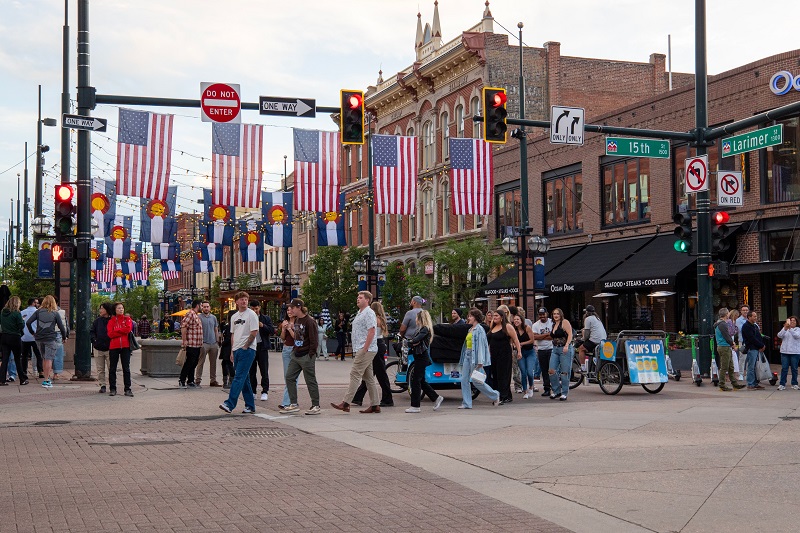
Today, Denver is known for its impressive downtown skyline, museums, professional sports venues, and leafy residential neighborhoods. The city combines modern urban life with easy access to the Rocky Mountains, making it one of Colorado’s most recognizable destinations.
Yet behind its polished appearance lies a fascinating history. Colorado’s capital began as a rough frontier settlement during the Gold Rush, when prospectors and entrepreneurs rushed west in search of wealth and opportunity. The story of how Denver got its name is especially intriguing because it involves political ambition, competition between neighboring settlements, and an unexpected twist.
So, who founded Denver, and why was the city named after James W. Denver? To understand the answers, we need to return to 1858, when gold fever swept across the Rocky Mountain frontier and changed the future of the region.
Gold Fever Reaches Cherry Creek
Long before Denver appeared on a map, Indigenous peoples had lived in and traveled through the region for thousands of years. Cheyenne and Arapaho communities used the area’s rivers, open plains, and established trade routes, maintaining deep connections to the land before American settlers arrived.
Everything began to change in 1858 when reports of gold discoveries attracted prospectors to the area. William Green Russell and other gold seekers found gold near Dry Creek, south of the Cherry Creek region. News of the discovery spread rapidly, encouraging hopeful miners to make their way toward the Pikes Peak area.
This migration became associated with the famous expression “Pikes Peak or bust.” Thousands of people traveled west hoping to discover gold and build fortunes. However, mining was not the only path to financial success. Many settlers soon recognized that supplying miners with food, equipment, transportation, land, and other essential services could also provide valuable business opportunities.
As more people arrived, temporary camps began developing into permanent communities. The meeting point of Cherry Creek and the South Platte River offered a promising location for settlement, commerce, and transportation.
That combination of gold fever, business ambition, and strategic geography set the stage for Denver’s founding. However, the first settlement in the area was not Denver City. Another community had already begun to take shape across the creek.
Auraria: The Settlement That Came First
How Auraria Got Its Start
Auraria was established before Denver City. In November 1858, miners organized the Auraria Town Company on the western side of Cherry Creek. The settlement was named after Auraria, Georgia, a mining community associated with the Russell brothers.
Auraria quickly attracted settlers who hoped to benefit from the growing Gold Rush. Cabins, small stores, and other structures appeared as people established homes and businesses in the area.
By the end of 1858, Auraria reportedly had around 50 log buildings. At that stage, it was larger than the settlement developing on the opposite side of Cherry Creek.
The early growth of Auraria demonstrated how quickly a promising location could attract people during the Gold Rush. Settlers needed places to live, supplies to purchase, and opportunities to earn money. Communities that could meet these needs had a better chance of surviving beyond the initial excitement of gold discoveries.
The Rival Settlement Across Cherry Creek
While Auraria was growing on the west bank, another group claimed land on the eastern side of Cherry Creek. They called their proposed settlement St. Charles.
However, the organizers behind St. Charles made a costly mistake. Many of them returned east to promote the development and complete the necessary paperwork, leaving the land claim with limited protection.
That decision created an opportunity for William H. Larimer Jr., an ambitious businessman who saw considerable potential in the area. Rather than allowing the St. Charles project to develop as originally planned, Larimer and his associates took control of the site and began organizing their own settlement.
This move marked an important turning point in Denver’s history. The land that had been associated with St. Charles would soon become the foundation of Denver City.
William H. Larimer Jr.: The Founder of Denver City
Who Was William Larimer?
William H. Larimer Jr. was a Pennsylvania-born businessman, land speculator, and militia general. In November 1858, he arrived in the Cherry Creek area with a group of associates from Leavenworth, Kansas.
Larimer recognized that the growing number of gold seekers created an opportunity to establish a prosperous town. He and his party took over the vulnerable St. Charles site on the eastern bank of Cherry Creek, directly opposite the developing settlement of Auraria.
On November 17, 1858, Larimer’s group approved the name Denver City. A few days later, on November 22, the Denver City Town Company adopted its constitution and began laying out the new settlement.
These actions helped establish the community as a formal townsite rather than simply another temporary Gold Rush camp.
Why Larimer Is Credited With Founding Denver
William H. Larimer Jr. is widely recognized as the founder of Denver because he played a central role in establishing and promoting the settlement that eventually became Colorado’s capital.
His efforts extended well beyond claiming land. Larimer worked to attract settlers, promote property sales, encourage investment, and establish Denver City as an important center for the surrounding region. He understood that the community’s future depended on more than gold discoveries. It also needed businesses, transportation connections, and political influence.
Larimer’s aggressive approach helped Denver City compete with Auraria and other developing communities across the frontier.
His legacy remains visible in the modern city. Larimer Street and Larimer Square both commemorate the man who helped turn a contested piece of land beside Cherry Creek into a settlement with ambitions of becoming a major Western city.
Although Larimer played a leading role in Denver’s founding, the name he selected belonged to someone else entirely.
Why Was Denver Named After James W. Denver?
The Political Strategy Behind the Name
The explanation behind Denver’s name reveals just how important politics could be during the American frontier era.
When Larimer and his associates selected the name Denver City in November 1858, the Cherry Creek settlements were part of Kansas Territory. James W. Denver was serving as the territory’s governor, making him a prominent political figure whose support could potentially benefit a new community.
Naming the settlement after the governor was likely a strategic decision. Larimer hoped that honoring Denver would help attract recognition and influence for his developing town. Political goodwill might also improve the settlement’s chances of securing important administrative advantages, including consideration as the county seat of Arapahoe County.
In a region where settlements competed fiercely for population, investment, and government offices, building relationships with influential political figures could offer a significant advantage.
The name Denver City reflected this ambition. It was not merely a label for a new settlement. It was also a calculated attempt to connect the town with someone who held political authority over the territory.
The Twist: James W. Denver Had Already Resigned
Here is the surprising part of the story.
James W. Denver had already resigned as governor of Kansas Territory before Larimer’s group selected the name. Unfortunately for the founders, news of his resignation had not reached the Cherry Creek settlements in time.
As a result, Larimer and his associates named their new town after a political figure who was no longer in the position they hoped to impress.
The timing makes Denver’s naming story particularly memorable. The founders intended to honor a territorial governor, but the political circumstances had already changed before their decision was made.
Despite that unexpected complication, the name stuck. Denver City continued to develop, eventually becoming known simply as Denver.
The episode illustrates how communication delays could influence decisions in the nineteenth-century American West. News traveled much more slowly than it does today, and people establishing communities on the frontier often had to make important choices without the latest information.
Denver City and Auraria: Two Towns Divided by One Creek
A Growing Rivalry
Denver City and Auraria occupied neighboring sites near the confluence of Cherry Creek and the South Platte River. Their locations offered similar advantages, including access to water, travel routes, and opportunities for trade.
However, their proximity did not immediately encourage cooperation. Instead, the two settlements competed for the resources and institutions that could determine which community would become the region’s leading center.
Both towns wanted to attract:
- New residents and families seeking opportunities in the West.
- Merchants and business owners who could support a growing population.
- Newspapers and other institutions that would strengthen their reputations.
- Stagecoach services and transportation connections.
- Government offices that could bring political influence and economic activity.
Auraria initially had the larger settlement, but Denver City pursued an aggressive strategy to attract businesses and establish its position.
The competition was about more than population. Each community wanted to become the preferred destination for travelers, entrepreneurs, investors, and government officials moving through the region.
The Stagecoach Deal That Helped Denver City Grow
One of Denver City’s most important moves involved the Leavenworth and Pikes Peak Express.
Denver offered land and shares to the transportation company, helping the young settlement secure an important stagecoach connection. This arrangement brought valuable transportation links to the community and supported the movement of mail, travelers, and commercial goods.
During the frontier era, transportation access could make a major difference in a settlement’s future. Communities connected to established travel routes were better positioned to exchange information, receive supplies, and develop commercial relationships.
Denver City’s efforts helped it strengthen its position against Auraria. As its transportation connections and commercial prospects improved, the settlement became increasingly competitive.
Still, maintaining two rival communities in such close proximity created practical challenges. Both needed stable economic conditions and a stronger regional identity to support long-term development.
Eventually, the advantages of cooperation became difficult to ignore.
The Merger That Created Modern Denver
When Denver City and Auraria Joined Forces
On April 5, 1860, representatives of Auraria and Denver City met on a wooden bridge over Cherry Creek to celebrate the union of their rival settlements. Auraria voted to join Denver City, bringing the two communities together under one name.
The merged community retained the name Denver. For many years afterward, the former Auraria settlement became known as West Denver.
The merger was a defining moment in the city’s development. Instead of competing for residents, businesses, and influence, the two communities could combine their resources and work toward a shared future.
Why the Merger Mattered
Bringing Denver City and Auraria together created a stronger community than either settlement could easily have developed on its own.
The merger combined population, property, commercial activity, and political influence. It also reduced the rivalry between two neighboring settlements that shared similar geographic advantages and economic goals.
A unified community had a better opportunity to attract investment, develop transportation links, establish public institutions, and build a lasting regional reputation.
The merger also helped lay the groundwork for Denver’s later growth into a major city. Although challenges remained, uniting the settlements gave the community a more stable foundation during a period of considerable uncertainty across the American West.
Where Auraria’s History Lives Today
Denver’s origins remain visible in the historic Auraria area, which is now home to the Auraria Higher Education Center.
The campus serves as the setting for three educational institutions: the University of Colorado Denver, Metropolitan State University of Denver, and the Community College of Denver.
Visitors can also explore historic buildings that preserve connections to the area’s past, including the Tivoli Brewery and St. Cajetan’s Catholic Church.
These landmarks offer a reminder that the modern educational district occupies ground associated with one of the earliest settlements in the Denver area. The neighborhood’s history connects today’s students, residents, and visitors with the Gold Rush communities that helped shape the city.
From Mining Camp to Colorado’s Capital City
Surviving the Challenges of the Frontier
Denver’s early development was far from guaranteed. The first accessible gold deposits became less productive, and some prospectors left in search of better opportunities elsewhere.
The settlement also faced the difficulties common to frontier communities, including isolation, harsh weather, flooding, and the uncertainty of an economy closely connected to mining activity.
For a town built during a Gold Rush, the decline of easily accessible gold could have threatened its survival. Denver, however, gradually developed an identity that extended beyond prospecting.
It became a supply center for miners and surrounding settlements, a place for merchants to conduct business, and a transportation hub serving a wider region.
These activities helped the community withstand changes in mining fortunes. Instead of relying exclusively on the discovery of gold, Denver increasingly benefited from the movement of people, goods, money, and information through the area.
Denver Becomes the Territorial Capital
Colorado Territory was established in 1861, creating a new political framework for the region. Denver did not immediately become its capital, but the community continued to gain influence as its commercial and transportation connections expanded.
In December 1867, Denver became the territorial capital. This development strengthened its position as an administrative center and helped increase its political importance.
Government offices brought additional activity to the city and reinforced its role in the development of the surrounding territory.
The decision also marked an important milestone in Denver’s transformation. What had started as a settlement associated with the Gold Rush was becoming a center of regional government and public administration.
Statehood and the Colorado State Capitol
Colorado became a state in 1876, further increasing the importance of establishing a permanent center for state government.
Denver’s political role continued to expand, and voters approved it as the permanent seat of state government in 1881. Construction of the Colorado State Capitol began in 1886, adding another important institution to the developing city.
The Capitol would become one of Denver’s most recognizable landmarks and a lasting symbol of its role in Colorado’s government.
These developments reflected a broader transformation. Denver was no longer simply a frontier settlement hoping to benefit from mining. It had become an increasingly important center for political leadership, commerce, transportation, and urban development.
How Railroads Changed Denver’s Future
Transportation played a major role in Denver’s growth during the late nineteenth century.
As the city secured railroad connections during the late 1860s and 1870s, it became easier to move people, supplies, and commercial goods through the region. Rail access helped reduce some of the isolation that had challenged the early settlement.
Improved transportation connections also supported business expansion and encouraged Denver to develop beyond its original mining-related economy.
Railroads helped connect the city with markets and communities elsewhere, strengthening its position as an important center in the American West.
Combined with its growing political influence and commercial activity, these transportation links helped Denver evolve from a Gold Rush settlement into a major Western city.
What Denver’s Name Really Represents
The story of Denver’s name begins with James W. Denver, but the city’s founding is closely associated with William H. Larimer Jr. and the settlers who established Denver City beside Cherry Creek.
Their story includes far more than the naming of a town. It brings together the excitement of the Gold Rush, the ambitions of land speculators, the rivalry between neighboring settlements, and the eventual merger that created a stronger community.
Several important events shaped Denver’s early history:
- The Gold Rush of 1858: Reports of gold discoveries drew prospectors and entrepreneurs to the Cherry Creek region.
- The founding of Auraria: Settlers established a community on the western bank of Cherry Creek before Denver City emerged.
- The founding of Denver City: William H. Larimer Jr. and his associates claimed the eastern site and chose the settlement’s name in November 1858.
- The naming surprise: The town honored James W. Denver, even though he had already resigned as governor of Kansas Territory.
- The merger of 1860: Auraria joined Denver City, uniting the rival settlements under one name.
- The rise of the capital: Denver’s growing commercial, transportation, and political importance helped it become the territorial capital and eventually Colorado’s permanent seat of state government.
Perhaps the most memorable detail is the role of timing. Larimer’s decision to honor James W. Denver was intended to help the new settlement gain political recognition, yet the governor had already stepped down before the name was chosen.
Even so, the name endured. Over time, Denver grew from a small frontier community into a city recognized throughout the United States and around the world.
Its history demonstrates how ambitious decisions, economic opportunity, transportation connections, and cooperation between rival settlements can influence the development of an entire region.
Visit Denver and Explore Its Founding Story
You do not have to rely on historical accounts alone to appreciate Denver’s beginnings. Several places around the modern city offer opportunities to connect with its early history.
Larimer Square
Larimer Square commemorates William H. Larimer Jr. and his role in establishing Denver City. Exploring the area provides a connection to the founder whose ambitions helped shape the city’s early development.
Confluence Park
Located near the meeting point of Cherry Creek and the South Platte River, Confluence Park offers a way to experience the landscape that helped attract early settlers. The waterways played an important role in the location and development of the original communities.
The Auraria Campus
The Auraria campus preserves the connection between modern Denver and the settlement that existed on the western side of Cherry Creek before the merger. Historic buildings, including the Tivoli Brewery and St. Cajetan’s Catholic Church, help keep parts of that history visible.
Exploring these locations can make Denver’s founding story easier to understand. They connect the city’s present-day neighborhoods and institutions with the ambitions of the people who established the early settlements.
Conclusion: A Name Born From Ambition and Timing
Denver began as a bold bet on gold, land, and opportunity. William H. Larimer Jr. helped establish Denver City in 1858, choosing a name that honored James W. Denver, the governor of Kansas Territory. The irony was that the governor had already resigned before the founders learned of the change.
Meanwhile, the rivalry between Denver City and Auraria shaped the early community until the two settlements united in 1860. Their merger created a stronger foundation for the city that would eventually become Colorado’s capital.
From its Gold Rush beginnings to its growth as a transportation hub and political center, Denver’s development reflects the ambition, challenges, and opportunities of the American West.
The next time someone asks how Denver got its name, you can share the full story: James W. Denver gave the city its namesake, William H. Larimer Jr. helped establish the settlement, and two rival communities came together to create the Denver we know today.
Want to discover more about Denver’s past? Explore its historic neighborhoods, visit landmarks connected to its founding, and uncover the people and events that transformed a frontier settlement into one of the West’s most recognizable cities.
This post is generated by Chatgpt.